Grow a Snake Plant in a Spiral Shape: 5 Tricks
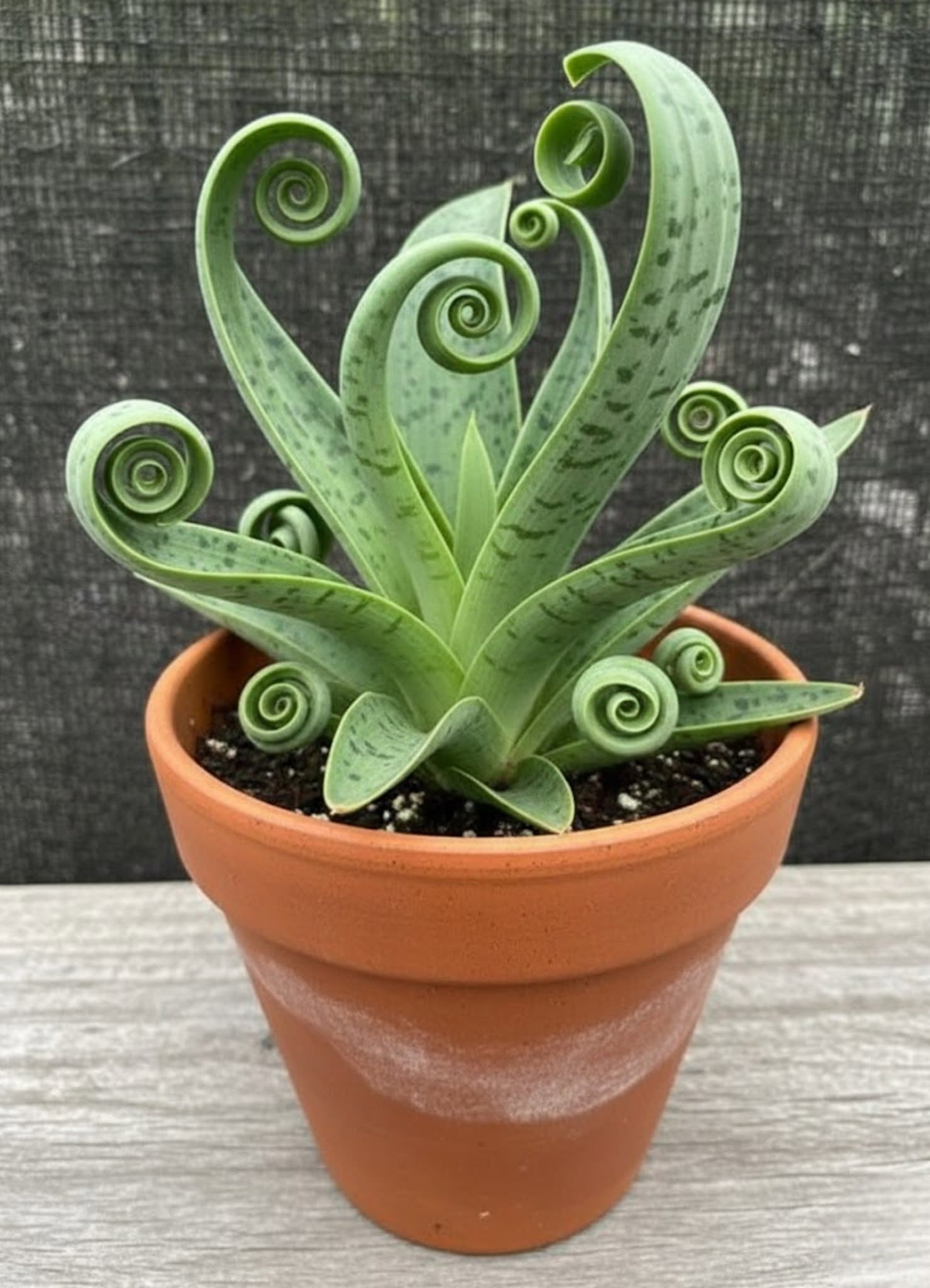
Who would have thought that Mother-in-Law’s tongue could be that twisted? But it’s possible, you can grow a beautiful snake plant in a spiral shape with these tricks!
Snake plants are already beautiful, but if you shape them into a spiral, it takes their beauty to the next level. Apply our techniques and tricks mentioned below, and you can train their tall leaves to twist gracefully.
And when you do this, don’t forget to be patient and let them grow so that they mature into spiral beauties.




How to Grow a Snake Plant In a Spiral Shape
1. Choose the Right Variety
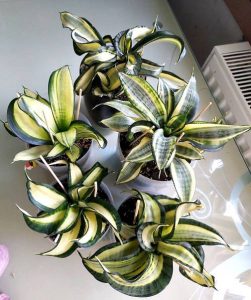
When you choose the right starting plant, it makes the entire process smoother for both you and your Mother-in-law’s tongue.
Of course, not all snake plants are suitable for spiraling. Some, like Sansevieria cylindrica (African Spear Plant), have long, cylindrical leaves that are naturally easier to train into a spiral compared to the flatter-leafed varieties. Sansevieria ‘Twisted Sister’ is one more that is known for its curled leaves.
Sansevieria trifasciata ‘Hahnii’, with its compact rosette growth, is another excellent choice as its short leaves respond well to shaping. You can also try Sansevieria masoniana (Whale Fin) or Sansevieria Ballyi Cordova, which is a hybrid variety and features at the beginning of the article above.
Hybrid cylindrica cultivars (like ‘Skyline’ or braided varieties) are a good option, too. Getting a good one will allow you to guide and twist the plant without snapping or scarring it, and you will easily have the desired shape.
Pro Tip: Always buy younger plants as they adapt to shaping better than mature ones with stiff leaves.
2. Use A Support Frame
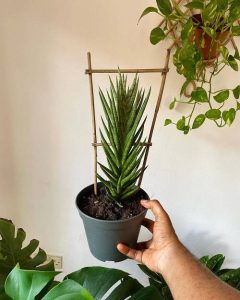
One of the most foolproof ways to train your snake plant is to use a spiral frame or trellis, as done with this Sansevieria francisii variety. This trick will give you a physical structure to wrap the leaves around, while guiding them into a neat coil.
You have to start by inserting a sturdy spiral-shaped rod or frame into the pot. Then gently tie the younger leaves to the structure using soft plant ties or jute twine. As your snake plant grows, keep adjusting and retying to maintain the shape. Over time, your plant will begin to harden in its spiral form.
Just avoid tying too tightly and leave enough room for the leaves to expand, or you risk scarring the surface.
3. Use the Gradual Twist Method
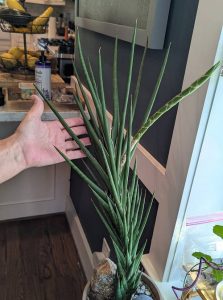
If you prefer a more hands-on approach without frames, this method is for you. As the leaves grow, gently rotate them a few degrees at a time in the direction of your spiral.
The key here is patience. Twist too much at once, and the leaf can tear. Think of it as slow, consistent nudging rather than forcing. Over several months, the plant will harden into its spiral.
Extra Hack: Mark the direction of your twist on the pot rim with a small arrow. This helps you stay consistent every time you adjust the leaves.
4. Apply Light Positioning
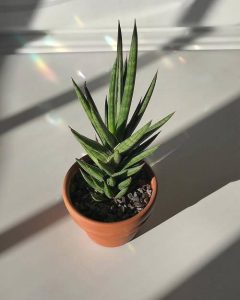
Believe it or not, you can use light placement to help your snake plant spiral. If you rotate the pot regularly and adjust the light source, you can influence the plant to lean and twist in the desired direction.
As you know, plants are naturally phototropic, and they bend toward light. You have to exploit this tendency. It won’t help you create a perfect spiral, but it will help you guide the plant in the general direction, making your spiral that much better and prettier!
Here is how to do it: Set up your light source slightly to one side and rotate the pot every couple of weeks. As the leaves follow the light, you can guide them to spiral rather than grow straight.
Note: This method takes more time than a frame but results in a gentle, naturally occurring spiral.
Pro Tip: Pair this with a moss pole placed at an angle. It will give the leaves something to lean against while they twist toward the light.
5. Create Multi-Plant Illusion
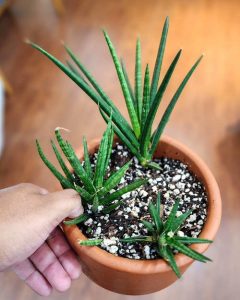
Sometimes, the easiest way to get a spiral is to cheat a little! So, instead of training one plant into a spiral, you can plant multiple young snake plants in the same pot and arrange them in a spiral pattern. This tip goes best with Sansevieria lady charm and similar varieties.
As they grow, the cluster will create the illusion of one giant spiraled plant. You have to place 3-5 young cylindrical snake plants in a circular pattern, and then angle them slightly in the direction you want the spiral to form.
Over time, their growth will appear to weave together, which will create that artistic twist without as much manipulation.
Pro Tip: Keep pruning offshoots that don’t align with the spiral pattern—this maintains the clean, coiled look.
Try these techniques consistently, and soon you will have a living sculpture that steals the spotlight in your room.